Multishop helps businesses coordinate multi-vendor product catalogs, inventory signals, and order workflows through one operational hub. This guide explains how Multishop fits modern marketplace and retail models, what buyers and suppliers typically need to align, and how to evaluate platform structure, data flows, and governance requirements without relying on hype.

Multishop is designed to support multi-vendor operations by bringing together key marketplace functions—such as catalog presentation, inventory awareness, and order handling—under a unified operational approach. In practical terms, the value of Multishop shows up when businesses need consistency across many sellers while still controlling fulfillment rules and operational governance.
From an industry perspective, the operational challenge in a multi-vendor environment is rarely “adding more products.” The real work is ensuring that product data stays coherent across suppliers, that stock signals are interpreted correctly, and that customer commitments (delivery windows, return policies, and service levels) map cleanly to what suppliers can actually fulfill. Multishop is often evaluated through that operational lens: how well it structures data, reduces manual handling, and supports clear responsibilities between the platform operator, suppliers, and customers.
When people talk about “multi-vendor marketplaces,” they sometimes focus on marketing outcomes—more selection, more niches, more competitive pricing. Those outcomes are important, but they do not happen automatically. The orchestration layer is what converts supplier realities (their catalog systems, inventory updates, shipping processes, and support routines) into a single customer experience that feels like one coherent brand. Multishop matters because it sits in the middle: not as a cosmetic layer, but as an operational translation and control system.
Think of multi-vendor commerce as an ecosystem of promises. Each supplier makes certain promises (what they have, what they can ship, how fast they can dispatch, and what policies they can honor). The marketplace operator makes additional promises (what the customer sees, what delivery expectations are communicated, how returns are handled, and how exceptions are resolved). Without a coordination mechanism, these promises conflict. Multishop helps prevent conflicts by formalizing the rules and workflows that govern how supplier data becomes customer-facing commitments.
At its foundation, Multishop addresses a common multi-party commerce requirement: a centralized management layer that can coordinate multiple trading parties without collapsing into chaos. Many organizations start multi-vendor commerce to expand assortment, reduce single-supplier dependency, or accelerate geographic coverage. However, operational complexity rises quickly when vendors differ in catalog formats, stock update routines, pricing conventions, and shipping capabilities.
Multishop-oriented implementations typically aim to standardize how product information is collected and transformed, how inventory is refreshed and validated, and how orders are routed to the right fulfillment path. When done well, the customer experience becomes more stable: fewer “out of stock” surprises, fewer mismatched listings, and clearer expectations around delivery and returns.
Under the hood, the “business purpose” is not simply to make multiple vendors appear in one store. The purpose is to create a repeatable operational model where scaling supplier count does not proportionally increase manual work. Without that model, every additional vendor becomes a bespoke integration project: you spend time reconciling naming conventions, deciphering SKU formats, chasing stock updates, and manually resolving pricing edge cases.
In a well-managed Multishop approach, scaling becomes more like capacity planning than firefighting. You still onboard new suppliers, but the integration steps follow standardized rules: required fields, validation checks, inventory freshness criteria, pricing precedence logic, and fulfillment state transitions. That predictability is what reduces operational drag and increases marketplace resilience during peak periods.
Another way to frame the purpose is governance and accountability. In multi-vendor commerce, it is not enough that “an order gets shipped.” The system must determine which vendor is responsible for which item and must maintain a reliable audit trail so you can resolve disputes. Multishop helps create that governance structure by establishing clear mappings between orders, vendor confirmations, shipping events, and policy workflows.
To assess whether Multishop is a suitable choice for your operation, focus on the underlying mechanisms rather than surface-level features.
Industry experts generally recommend evaluating these components using “workflow scenarios.” For example: a top-selling item runs out at a supplier while still being visible on the storefront. Another scenario: a customer places an order right before a vendor’s holiday closure. Multishop’s effectiveness is measured by how gracefully the system handles such conditions—through rules, audit trails, and queueing/confirmation logic.
To make evaluation more rigorous, build a test matrix that includes not just “happy path” flows but also borderline cases that happen frequently in live commerce. For instance, consider what happens when a supplier updates stock but forgets to update a variant attribute, or when two suppliers submit the same SKU for different products. Another common case is partial cancellation: a customer cancels one item from a multi-item order, and the system must reconcile fulfillment status and refund responsibility.
Also evaluate how the system behaves under load. Multi-vendor marketplaces often experience correlated spikes: when a promotion goes live, many suppliers receive orders at the same time, and inventory updates may slow down. Multishop should support resilience features such as idempotent processing, consistent state transitions, and safe retry mechanisms for supplier confirmations.
Finally, consider operational usability. Governance is only useful if it can be managed by real teams: merchandising, operations, customer support, and vendor managers. Multishop should provide visibility into errors and exceptions, not just automated behavior. When something goes wrong, you need to know why it happened and what the system decided, so you can correct data or adjust policies quickly.
One of the very consequential decisions in a multi-vendor environment is whether inventory is effectively managed by the platform (central authority) or by suppliers (distributed authority). Multishop is commonly used in models that can support either approach, but the outcomes differ.
Whichever model you choose, the governance rules must be explicit. For example, define expected stock update frequency, data quality checks, and how to treat stale inventory signals.
In a platform-managed inventory model, the marketplace operator typically introduces additional logic to smooth out inconsistencies. That might mean using a “freshness buffer” (e.g., you treat stock as valid only if updated within the last N minutes/hours) or combining supplier stocks with predictable rules (such as selecting the maximum available among eligible suppliers, or applying allocation rules if you use reserved quantities). While this can improve customer confidence, it also makes monitoring critical: you must detect when suppliers stop updating and you must have a clear decision about whether to hide inventory, mark it as uncertain, or allow backorders.
In a vendor-managed model, the marketplace operator tends to treat supplier signals as authoritative. That can work well when suppliers are disciplined and capable of frequent updates. However, in real-world operations, many suppliers update stock manually or through systems that may batch changes. That leads to common operational issues: customers place orders during windows where inventory appears available but is no longer in stock. To mitigate that risk, you still need rules—perhaps a more conservative freshness threshold, or a “soft availability” approach where low-stock items are handled more cautiously.
Another nuance: inventory is not just quantity. For many categories, inventory availability includes other dimensions such as condition (new vs refurbished), warehouse location, or compliance attributes (e.g., regulated goods). Multishop inventory logic should therefore support more than a single integer stock field. For example, “units available” in one warehouse may be shippable in a given region but not in another, so fulfillment eligibility depends on location and shipping capability as well as raw stock count.
As you design inventory governance, align it with customer promises. If you offer a delivery estimate that depends on stock location, but you aggregate stock without location awareness, you will frequently disappoint customers. That is why inventory orchestration is inseparable from order routing logic and fulfillment mapping.
Many teams underestimate the effect of data quality on multi-vendor performance. Multishop-type operations succeed when product data becomes reliable enough that automation can safely act on it. This includes standardized attribute formats, consistent unit handling, and careful mapping of product identifiers.
From an expert standpoint, data quality is not a one-time task. It needs continuous validation: monitoring mismatched attributes, detecting duplicate listings across vendors, and auditing price/availability changes against supplier-confirmed data. When Multishop is implemented with these practices, the system reduces manual exceptions and strengthens customer trust.
To see why data quality is so influential, consider the customer journey from search results to checkout. If product titles, images, and variant attributes differ across vendors, the storefront can show misleading information. If variant matching is inconsistent (e.g., size “M” from one vendor is “Medium” from another), the customer might select a variant that later cannot be fulfilled. Even if the system eventually corrects the issue, the customer experience is harmed by uncertainty and friction.
Operationally, bad data is expensive because it creates “exception work.” Exception work consumes customer support time (to resolve cancellations), operations time (to contact vendors), and financial resources (refunds and chargebacks). Multishop reduces exception work only when it can trust the incoming data.
Quality also applies to the metadata surrounding items. For example, category assignment influences delivery estimates, shipping costs, and return handling. Product classification must therefore be standardized enough that the platform can apply the correct rules. If a vendor misclassifies an item (e.g., assigns a category that implies non-returnable goods), the marketplace can inadvertently mislead customers about return eligibility.
Another dimension is identifier stability. SKU mapping sounds simple, but in practice vendors may change SKU codes during system migrations, or they may use different SKU conventions across catalogs and warehouses. Multishop needs mechanisms to handle identifier updates safely, preserving order history and ensuring that new identifiers continue to map to the same product concept.
Data quality workflows typically include:
When these components are integrated into a Multishop operational model, the marketplace becomes easier to manage as it scales. Instead of treating each supplier’s data as a bespoke artifact, you treat it as input to a standardized transformation and governance pipeline.
Multi-vendor commerce is ultimately a coordination system among parties with different capabilities. Multishop operations typically benefit from clear supplier onboarding standards so that each vendor understands what they must provide and how often they must update critical fields.
Common onboarding responsibilities include:
In practice, these requirements determine whether order fulfillment is predictable. If supplier responsibilities are vague, customers experience variability that damages conversion and repeat purchase intent.
Onboarding should therefore be treated as a process, not a form. A process includes training vendors on how the system interprets their input, how and when they should submit updates, and what the marketplace will do when input is missing or inconsistent. Vendors must understand consequences. For example, if a vendor fails to update inventory within a defined freshness window, should the marketplace hide items, allow backorders, or keep them visible but mark them uncertain? The supplier needs to know the behavior so they can decide whether to invest in better update routines.
Responsibility boundaries also matter in multi-party policy enforcement. When a customer initiates a return, who handles inspection? Who issues refunds? Who pays return shipping? Who handles damaged or missing packaging? Multishop can orchestrate the workflow, but the operational model must clarify who does what. Otherwise, disputes become endless: you contact the supplier, the supplier contacts you, and the customer waits.
As marketplaces mature, onboarding often expands to include operational readiness requirements. For example:
When onboarding is thorough, you reduce the probability of systemic issues later. When onboarding is superficial, you often discover problems at peak times—when the cost of mistakes is highest.
Although customers often focus on “the price,” the operational truth is that multi-vendor pricing must be governable. For Multishop-like systems, pricing complexity can include vendor base pricing, platform markup, promotions, and potentially region-specific rules.
Industry top practice is to define pricing precedence. For example:
These rules should be transparent internally and traceable. If you can’t explain pricing outcomes during an audit or customer dispute, you’ll likely incur operational costs later.
Pricing governance is particularly tricky because it involves both arithmetic and timing. Consider timing: if a vendor changes base price at the same time the platform applies a promotional discount, which adjustment should apply first? Many disputes occur not because the final number is wrong, but because the system’s behavior is not deterministic in the customer’s perception. For instance, a customer sees a promotional price on the product page but the checkout price differs due to timing or rule precedence. Even a small mismatch can damage trust.
Timing governance therefore should include:
Operationally, you need audit trails. When an order is placed, the final unit price and discount breakdown should be stored so you can reconcile financial reporting later. Multishop operations should also store “why” information: which rules generated the final price. This is essential for chargeback disputes and accounting close processes.
Pricing governance can also create incentives. If suppliers are allowed to set their prices freely, you might see abrupt changes that affect marketplace competitiveness. Some marketplaces instead restrict price changes or impose floor/ceiling limits to maintain brand integrity. Whether you allow free pricing or restrict it, Multishop must support the enforcement mechanism so pricing is consistent across your storefront.
Finally, promotion governance includes exclusivity and conflict resolution. If multiple promotions are active simultaneously (e.g., a vendor-level discount plus a platform-wide coupon plus a category-level markdown), you must define whether discounts stack, which ones override, and how customers are informed about what they receive. Deterministic rule resolution is critical; otherwise, customer support will become the “decision engine,” which is not scalable.
Even when your platform’s logic is correct, miscommunication can still harm results. Localization should cover how you present availability, shipping estimates, and return expectations.
For example, in many markets, customers expect delivery language to be direct and consistent—similar to how people in everyday commerce conversations prefer clear timelines rather than ambiguous phrasing. If your operation serves multiple languages or customer expectations vary by region, make sure Multishop workflows map to localized messages, not just translated text. Delivery terms and “out of stock” handling need consistent tone and clarity.
Localization is often treated as a translation problem, but in multi-vendor orchestration it is also a rules-and-risk problem. Delivery estimates might vary by region because different vendors ship to different geographies, and different categories have different handling rules. If the system generates delivery messaging based on generic assumptions rather than vendor eligibility, localization will not help—customers will still receive misleading messages.
Communication also includes policy presentation. Return windows, refund processing timelines, and warranty terms must be communicated accurately. In multi-vendor settings, these policies might differ by supplier or category. Multishop should support the concept of policy inheritance and override: a platform default policy, supplier overrides, and category overrides. The storefront should display the correct combination based on which vendor fulfills the order item.
Another important aspect is customer messaging during exceptions. Suppose a vendor cannot fulfill an order after purchase, or an item is delayed due to stock issues. The wording and timeline should communicate the situation without blaming either the customer or the supplier. If your system can explain the status update deterministically (“Vendor confirmation received at time X; estimated ship date updated to date Y”), support tickets drop because customers understand what’s happening.
Localization should therefore extend to operational status messages such as:
In an orchestrated multi-vendor model, customer communication becomes an extension of governance. If governance rules are precise, communication can be precise too.
Multi-vendor operations face risks: data inconsistencies, delayed inventory updates, partial fulfillment, and policy conflicts. While Multishop can help structure workflows, the organization still needs risk controls.
Key risk-control measures include:
These are operational basics, but they are exactly what differentiates stable multi-vendor marketplaces from those that generate constant manual work.
Risk management must include both prevention and response. Prevention involves validation and guardrails that stop obviously incorrect data from reaching customers. Response involves protocols for when incorrect data slips through or when supplier behavior deviates from expectations.
Consider partial fulfillment. In many marketplaces, a single customer order may include items from multiple suppliers. If one supplier ships and another does not, the system needs to decide whether to:
Each option has tradeoffs. Multishop should support deterministic logic and clear communication so the customer is not surprised by multiple packages or delayed items.
Another risk is policy conflict. A platform might have a standard return policy, but suppliers might have different warranty rules or exceptions for certain product categories. Multishop should support policy normalization and resolution. The system must determine which policy applies to each order item and store it for later reference in return flows.
There is also financial risk. When suppliers fail to dispatch or deliver, marketplaces may need to refund shipping charges, issue credits, or absorb costs for returns. Risk controls should therefore tie operational signals to financial outcomes. For example, if vendor dispatch confirmation is consistently late, you might adjust vendor terms or reduce their eligibility for fast-delivery categories.
Lastly, consider compliance and documentation risk. Some categories require proof of origin, serial numbers, or regulatory disclosures. Multishop catalog structures should be able to carry necessary documentation fields, and order fulfillment workflows should be able to capture evidence. This is especially important when disputes arise.
| Area | Multishop-aligned requirement | What to confirm with suppliers | Operational condition/expectation |
|---|---|---|---|
| Catalog ingestion | Standardized product schema and attribute mapping | Required fields, image standards, variant rules | Catalog updates must pass validation before publication |
| Inventory visibility | Defined availability logic (real-time or buffered) | Stock update frequency and data format | Stale inventory must trigger guardrails (hide/flag/backorder) |
| Pricing governance | Clear price precedence and promotion precedence | Commission/fees and who controls final sell price | Promotion conflicts require deterministic resolution rules |
| Order routing | Vendor selection based on fulfillment eligibility | Shipping regions, carrier support, handling times | Every order item must map to a capable vendor |
| Fulfillment confirmations | Vendor acknowledgment and shipping event capture | How vendors confirm dispatch and provide tracking | No silent failures: orders should reach a status within defined time |
| Returns and cancellations | Workflow rules aligned to supplier capabilities | Return windows, refund responsibilities, warranty handling | Customer-facing policy must match internal fulfillment reality |
The following steps describe a practical approach to setting up Multishop operations. Adjust them based on your product category, supplier maturity, and expected order volume.
To make this implementation guide even more actionable, treat each step as a “control system design” activity. Instead of focusing only on configuration, focus on the measurable outputs of each step and how those outputs influence customer experience.
For example, when you standardize product data, define measurable acceptance criteria: a certain percentage of catalog items must meet validation rules; the system must identify and reject duplicates; the variant matrix must be internally consistent. When you set inventory rules, define measurable freshness thresholds and confirm how often the platform hides or flags items due to stale data. When you configure pricing governance, define conflict resolution outcomes and ensure they are deterministic by design.
During scenario testing, capture not just whether scenarios “work,” but also how the system records decisions. If your system routes an item to vendor A because vendor B is not eligible for the shipping region, you should be able to explain that decision later. That is how operations teams avoid confusion and handle disputes efficiently.
Also consider implementation sequencing. It’s usually risky to scale vendors while core governance rules remain under-tested. A safer approach is to start with a limited set of suppliers and a limited catalog subset, then expand in phases. Phase-based rollout helps you find misalignments in onboarding expectations, inventory update routines, and return workflows before those misalignments affect a large customer base.
Finally, define ownership during implementation. Multishop operations affect multiple teams: engineering, product, merchandising, operations, customer support, finance, and vendor management. Assign explicit owners for catalog schema decisions, inventory freshness settings, pricing precedence rules, and exception workflow design. Without clear ownership, you risk inconsistent decisions that later become difficult to unwind.
Multishop operations are only as stable as the processes supporting them. Consider the following conditions and requirements before scaling vendor counts:
To make “sustainable performance” concrete, you should also define operational metrics that indicate whether governance is functioning. These metrics become leading indicators rather than after-the-fact reporting.
Examples of sustainability metrics include:
When these metrics worsen, you should treat them as signals that governance rules are not being followed or that suppliers are changing behavior. Sustainable performance requires a feedback loop between metrics, supplier onboarding, and operational rule refinement.
Another sustainability condition is consistent vendor communication. If vendors receive feedback about their data errors or fulfillment delays with no structured guidance, improvement is slow. Multishop operations should therefore include vendor management processes: error reports, recommended fixes, training materials, and escalation when performance does not improve.
As you scale, you might also introduce tiering of suppliers based on reliability. High-reliability vendors can be eligible for fast delivery slots or priority inventory allocation, while lower-reliability vendors might be limited to longer delivery commitments. This approach is common because it aligns customer promises with operational realities and reduces the incidence of customer dissatisfaction.
Because “marketplace performance” claims can be inflated, it’s top to rely on established industry findings. Research and industry commentary commonly emphasize that customer trust is closely tied to fulfillment reliability and transparency, and that data quality materially affects conversion and customer service costs. For background context on how e-commerce customer expectations and service reliability influence outcomes, see:
While these sources do not “prove” a single platform’s effect, they support the principle that consistent service, clear policies, and reliable fulfillment processes are central drivers of customer satisfaction in online commerce.
To connect these principles to Multishop specifically, consider how customer trust is earned and lost. Trust is earned when customers receive what they were promised: correct items, delivered within the expected timeframe, with return policies that work smoothly. Trust is lost when promises are broken: inventory misrepresentation, delayed shipping, and confusing return handling.
Multishop improves your ability to keep promises by formalizing the operational translation layer. Catalog data becomes normalized and validated. Inventory availability becomes governed with freshness thresholds. Orders become routed deterministically to eligible vendors. Fulfillment events become captured and communicated. Returns and cancellations become aligned with real responsibility boundaries. Each of these actions reduces the chance of service failure.
Data quality and transparency act like preventive medicine. Instead of detecting and resolving issues after customers complain, you detect likely failures before they reach customers. That reduces both direct customer service costs and indirect costs such as reputation damage, which can reduce conversion and repeat purchases.
Another evidence-aligned principle is consumer protection. Clear policies and consistent workflows protect customers and protect the marketplace operator as well. When your return handling and cancellation policies map to operational capability, you reduce refund disputes and the risk of regulatory complaints. Multishop helps align policy presentation to operational workflows by ensuring that the same rules used internally are reflected in customer-facing messaging.
Multishop-based setups generally coordinate product catalog handling, inventory awareness, and order workflow routing so that multiple suppliers can operate under consistent platform rules.
In practice, “manage” includes the translation and governance of supplier inputs into platform outputs. That means product data is normalized into a shared schema; inventory signals are interpreted using a freshness and availability model; and order placement triggers deterministic routing to eligible vendors. Additionally, Multishop typically manages operational states that connect supplier actions (dispatch confirmations, tracking events) to customer-facing order statuses.
Use defined availability logic (direct or buffered), enforce inventory update routines with suppliers, and apply guardrails when stock signals become stale or incomplete.
More specifically, you can reduce out-of-stock issues by setting strict inventory freshness thresholds and by designing fallback behaviors. For example, if a vendor’s inventory feed is stale, the system might temporarily hide items or convert availability to a backorder mode. You can also implement low-stock heuristics: items with low quantity might use stricter routing or require closer confirmation from suppliers before allowing purchase.
Often yes, but pricing governance should specify precedence between vendor-set prices and platform-level promotions. Deterministic pricing rules prevent disputes and inconsistent storefront display.
To keep supplier-controlled pricing from creating chaos, you usually define boundaries such as minimum and maximum allowed pricing, permitted discount ranges, and how price changes propagate to the storefront. You also define how long the storefront reflects supplier price changes before re-evaluation, and whether promotions override vendor price changes or stack with them.
It’s usually data and workflow misalignment: inconsistent product attributes, delayed inventory updates, or unclear responsibility boundaries for fulfillment and returns.
While there are other risks—fraud, logistics failures, compliance gaps—misalignment is often the most common because it grows with scale. Each supplier adds variation, and without normalization and governance that variation becomes an operational burden.
Yes. Customer-facing delivery, returns, and cancellation terms should reflect real operational capabilities, including supplier dispatch timelines and return-handling responsibility.
Even if you already have customer policies from a single-supplier model, you must revise them to accommodate multi-vendor realities like partial shipments and supplier-specific return processes. Ideally, your policy presentation becomes rule-driven so it adapts based on which vendor fulfills each item and which category rules apply.
Start with standardized catalog requirements, clear inventory update expectations, defined shipping parameters, and measurable response/confirmation expectations. Then run scenario tests to validate the end-to-end workflow.
Effective onboarding also includes operational readiness checks. Vendors should demonstrate that they can dispatch orders within agreed time windows, provide valid tracking information, and respond to exception workflows. Additionally, vendors should understand how their data affects storefront availability and how the platform resolves pricing and policy conflicts.
Track operational indicators such as inventory staleness rate, catalog validation failure rate, order exception frequency, fulfillment confirmation time, and dispute/return causes. Use this data to improve supplier compliance and refine system rules.
You can also assess customer experience indirectly through support ticket themes, repeat purchase rates, and refund/return rates. When operational KPIs improve but customer sentiment does not, it can indicate communication problems (messaging, localization, policy explanations) rather than orchestration failures.
Multishop is top understood not as a collection of UI features, but as an operational coordination layer for multi-vendor commerce. When catalog data is normalized, inventory rules are explicit, and order routing is deterministic, businesses gain the stability required for repeat purchases and lower operational friction. When those foundations are weak, even a strong platform cannot compensate for inconsistent supplier inputs and unclear fulfillment governance.
Approach your Multishop evaluation like an engineer and an operator: test real scenarios, confirm responsibility boundaries, define conditions for publication and availability, and continuously monitor outcomes. That method is how multi-vendor systems become reliable products—rather than ongoing troubleshooting exercises.
Ultimately, the goal is to create a marketplace where trust compounds. Each successful order improves data quality, supplier behavior, and operational efficiency, which in turn reduces exceptions and stabilizes customer expectations. Multishop helps make that compounding effect possible by turning vendor variability into governed, auditable workflows.
A Guide to Cost-Efficient Small Electric Cars for Seniors

Mastering Debt Consolidation: Boost Your Credit Score and Manage Interest Rates

Your Guide to Loans, Credit Checks, and Interest Rates

Affordable Independent Living: Finding the Right Senior Housing

Guide to Senior Living Apartments: Affordable and Comfortable Environments

Leasing a Car: Expert Tips for Your Next Vehicle

Maintaining Oral Health After Tooth Loss with Dental Implants

Maintaining Oral Health with Dental Implants for the Elderly

Understanding Product Sourcing and Reference 24944608


Multishop Guide for Efficient Multivendor Selling
Multishop helps businesses coordinate multivendor listings, inventory signals, and fulfillment workflows in one operational approach. This guide explains what Multishop typically means in practical commerce, how its marketplace logic relates to suppliers and pricing strategy, and what conditions companies should verify before adopting a multivendor setup.

Multishop Marketplace Strategy for Suppliers and Buyers
This guide explains how Multishop marketplaces work in practice, from supplier onboarding to pricing and inventory alignment. It objectively outlines how multi-vendor platforms support product discovery, order routing, and operational control. Readers will also find an expert-style decision framework, conditions to verify before listing, and practical FAQs to reduce procurement and storefront risks.
How Multishop Streamlines Multi-Store Commerce
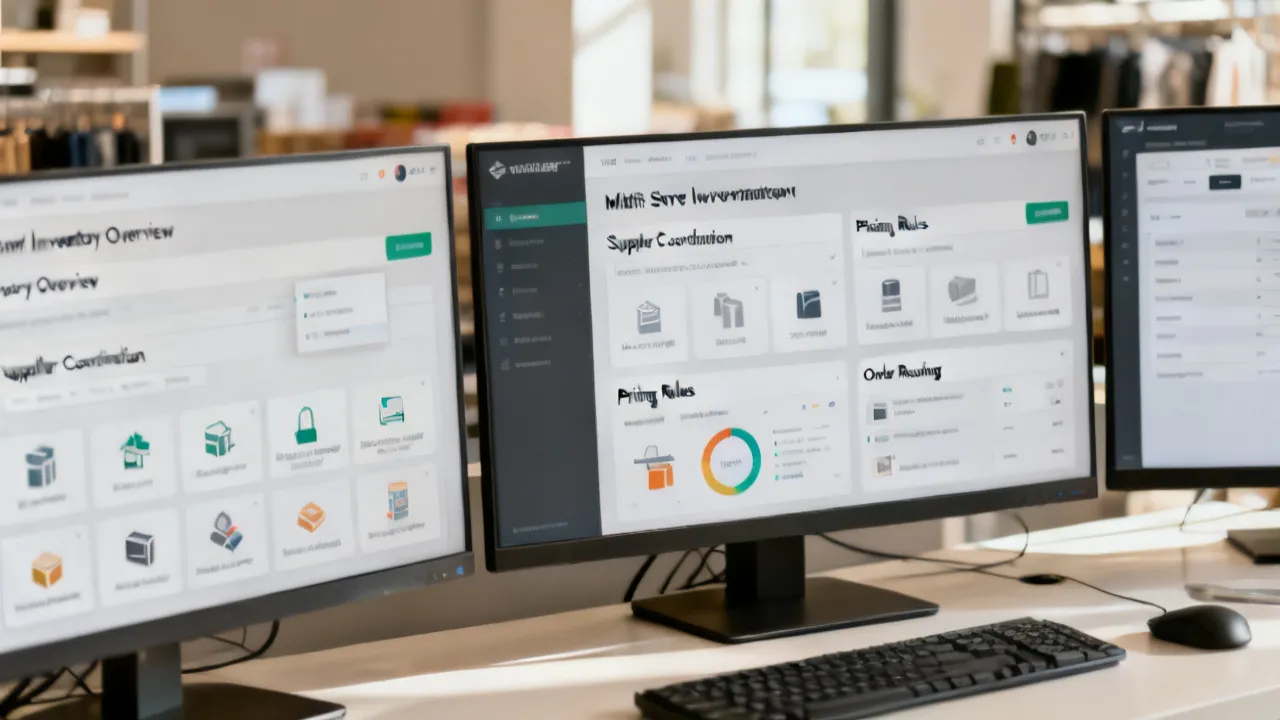
This guide explains how Multishop can improve multi-store operations by unifying product data, supplier coordination, and pricing rules across channels. Objectively, “multishop” commonly refers to platforms that support multiple storefronts or brands under one operational framework. The focus here is on practical decision criteria, integration considerations, and compliance requirements for sustainable growth.
Multishop Guide: Using Supplier Networks and Pricing Signals
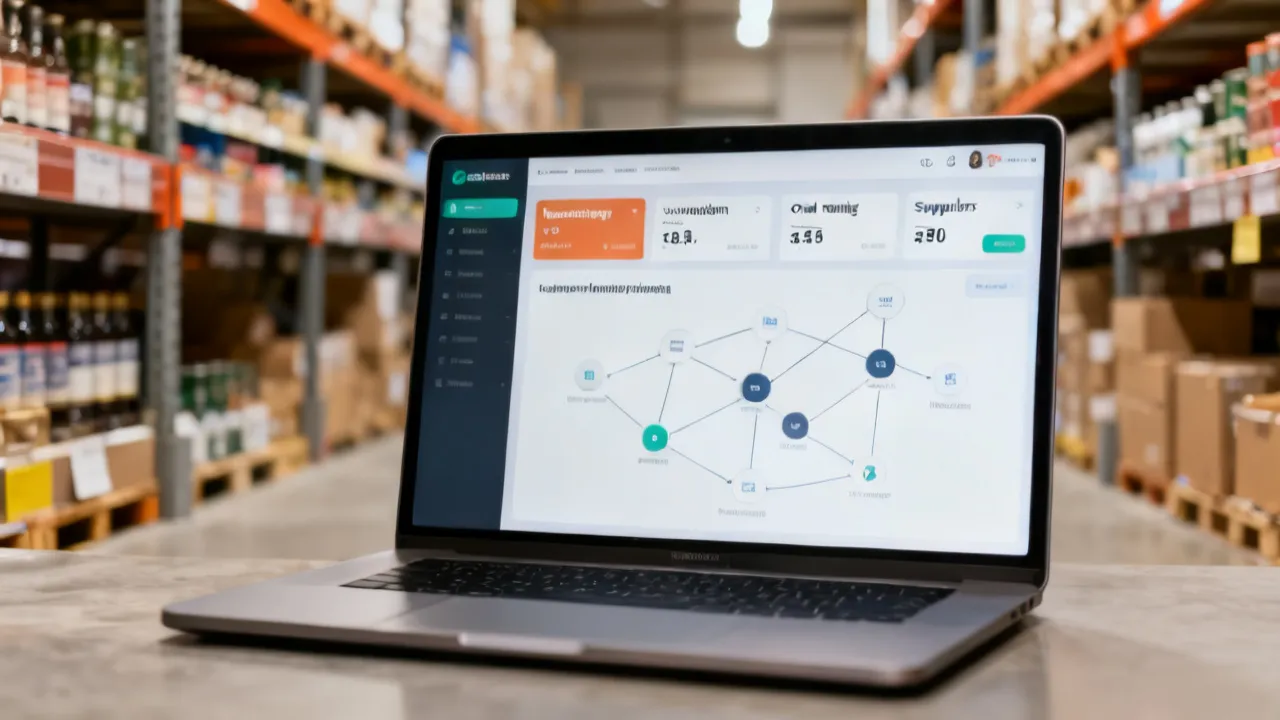
This guide explains how Multishop can help businesses coordinate multiple sales channels, align inventory and supplier workflows, and interpret pricing signals for steadier fulfillment. Background context is provided on the underlying concepts behind multichannel commerce, supplier sourcing, and operational controls, written objectively to support practical decision-making.
Multishop Guide for Multi-Vendor Operations
Multishop helps businesses coordinate multi-vendor product catalogs, inventory signals, and order workflows through one operational hub. This guide explains how Multishop fits modern marketplace and retail models, what buyers and suppliers typically need to align, and how to evaluate platform structure, data flows, and governance requirements without relying on hype.

Multishop: How to Choose the Right Marketplace Setup
This guide explains how Multishop enables multi-vendor operations, clearer product management, and smoother supplier coordination. Objectively, “Multishop” in e-commerce usually refers to platforms that support multiple storefronts or vendor catalogs under one operational framework, helping brands standardize onboarding, catalog rules, and fulfillment workflows—while still allowing localized merchandising decisions and governance controls.
